If a restaurant fails a hood or exhaust inspection, the outcome is rarely a mystery. The deficiency notice tells you what was found, and that determines what has to happen next. Heavy grease past NFPA 96 limits usually means a cleaning has to occur before reinspection. A fire suppression problem points to separate service work. This article explains how to read the situation, respond calmly, and prepare proof for the follow-up. Restaurant operators in Metro Vancouver can use this as a practical first step, not as legal advice.
What a failed hood inspection actually means
A failed hood inspection is not a reason to panic, but it is a reason to move. The kitchen exhaust system removes heat, smoke, and grease vapor from cooking equipment through the hood, filters, ductwork, exhaust fan, and roof fan. Grease travels through that entire route and collects in places that routine daily wipe-downs cannot reach. That is why inspectors focus on grease depth and on the condition of the fire suppression system. Hood inspections performed on a regular basis help confirm that grease does not accumulate in hard-to-reach areas and that suppression nozzles are still clear and operational. A failed inspection simply signals that one of those conditions needs correction.
At its core, the notice usually points to one of three situations: a cleaning deficiency, an access deficiency, or a mechanical deficiency. Each one has a different fix and a different person responsible for resolving it. The quick-reference table below compares the situations restaurant operators most often see on a deficiency report.
Use the table as a planning tool, not as a code interpretation. The exact wording on your notice may differ, and local requirements can vary. When in doubt, confirm the expected correction with the inspecting authority.
Your response plan after a failed hood inspection
A deficiency notice often includes a reinspection date, which creates a deadline. The calmest way to handle that deadline is to follow a simple sequence: document, define the scope, clean, repair or refer, retain proof, and schedule the follow-up. Working through those steps in order prevents small problems from turning into repeated fire inspection deficiencies.
Document the issue
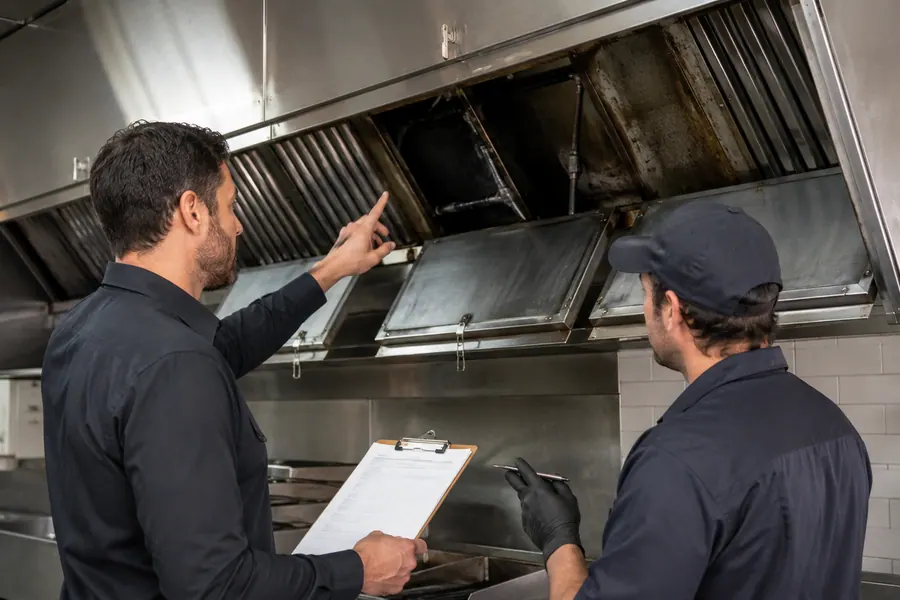
Start by photographing every deficiency listed on the report, not only the ones that are easy to see from floor level. Note grease depth where it can be measured. Record the condition of access panels along the duct run and the position of suppression nozzles. Share the findings with the owner or general manager the same day, using a clear and factual explanation of the fire risk and the timeline. A written record also gives your cleaning crew a concrete starting point.
Identify the scope
Sort the deficiencies into categories. A finding that describes visible grease accumulation in the hood or duct is a cleaning deficiency. A finding that mentions a missing access opening or an access panel that is too small to inspect the duct interior is an access deficiency. A finding about the suppression system, detection links, or gas and electrical shutoffs is a mechanical issue. Some kitchens have complex layouts, tall ceilings, or ductwork that runs in many directions. In those cases, a quick visual check may not be enough. The cleaner needs to confirm that every section of the exhaust path can actually be reached before the work begins.
Clean the grease
For grease-related deficiencies, the standard approach is a thorough down-to-the-metal cleaning of the kitchen exhaust system. That means removing accumulated residue from the hood itself, the filters, the interior of the ductwork, the exhaust fan, and the roof fan. Cleaning only the visible hood surface is rarely enough, because inspectors can open access panels and look deeper into the system. Grease buildup inside the duct is a common reason a cleaning-related deficiency appears on a report in the first place.
Repair or refer
Cleaning crews remove grease and can identify conditions that need attention, but they are not typically the right resource for every correction. If an exhaust fan does not operate, a fire suppression system fails a test, or detection links have expired, refer that work to the appropriate qualified technician. Access panels can also cause inspection failures on their own. Fire-rated access panels most often fail because the panel has the wrong fire rating for the assembly or because the label is missing or damaged. Those corrections usually require a contractor, not a cleaning company.
Retain proof
Documentation is the bridge between the failed inspection and the reinspection. Keep the original deficiency notice, your photos, the service date, the scope of work performed, and any invoice or report provided by the cleaning company. If a suppression technician handled repairs, keep that record as well. When the inspector returns, having clear proof that corrective work was completed makes the reinspection conversation much simpler.
Schedule the follow-up
Book corrective cleaning as soon as possible, ideally within 24 to 72 hours of the failed inspection. If the inspector flagged an immediate hazard, the work should happen even sooner. After the cleaning is complete, confirm the reinspection date and make sure the schedule allows enough time for any additional repairs to be finished first. A follow-up inspection is an opportunity to close the file, not to repeat the same conversation.
Where cleaning ends and other work begins
Understanding the boundary between cleaning, maintenance, and mechanical repair saves time and avoids frustration. A kitchen exhaust cleaner can remove grease from filters, hood surfaces, duct interiors, and fans. A cleaner can also point out that grease accumulation is blocking a suppression nozzle, but clearing the nozzle and testing the suppression system may fall under the scope of a fire suppression service provider. Likewise, installing new access panels or replacing a fire-rated access panel with the wrong rating is construction or contracting work, not part of a routine exhaust cleaning.
Regular maintenance reduces the chances of a surprise on inspection day. When hood inspections happen consistently, they help ensure that grease does not build up in hidden spaces, that suppression nozzles stay clear, and that the kitchen is not caught off guard by a problem that developed slowly over months of operation. For operators in Metro Vancouver, this is especially relevant because the cost of downtime after a failed inspection often outweighs the cost of keeping the system on a dependable cleaning schedule.
Anonymized deficiency examples to keep on file
Real deficiency reports are specific to each kitchen, so the most useful file you can keep is one that shows what common corrective actions look like. Below are anonymized example categories that reflect the types of findings described by fire safety professionals. They do not represent any single customer or property.
Hard grease deposits inside a duct spool that were not visible from the filter bank.
A small access opening that did not allow the cleaning crew to see or reach the full duct interior.
A fire-rated access panel with a missing label, making the rating impossible to confirm.
Suppression nozzles covered by accumulated grease in a high-volume cooking area.
An exhaust fan located in a position that made regular cleaning impossible without additional access.
If your inspection report includes similar language, use it as evidence of the scope that needs to be corrected. Pair the written deficiency with your own documentation so the cleaning team can confirm the issue was actually resolved before the reinspection date.
Corrective cleaning before reinspection
When the deficiency is grease related, the direct path forward is professional kitchen exhaust system cleaning for restaurants. A full-system service addresses the areas that inspectors are most likely to check, including the hood, filters, ductwork, and exhaust fan. It also gives you a dated record of the work performed, which becomes part of the documentation you bring to the follow-up.
Before committing to a service provider, ask what the cleaning includes and whether every section of the exhaust path will be accessed. If access panels are missing or undersized, that issue has to be resolved first; otherwise, the same deficiency is likely to reappear. A good cleaning company will also tell you honestly when a repair belongs to another trade.
Frequently Asked Questions
How soon does corrective cleaning need to happen after a failed inspection?
Most guidance points to scheduling corrective cleaning within 24 to 72 hours of the failed inspection, with faster action required if the inspector identified an immediate hazard. The reinspection date on your notice is the real deadline. Confirm that date, then work backward to make sure cleaning and any necessary repairs are completed before the inspector returns.
Can a kitchen exhaust cleaner fix problems with access panels?
A cleaner can document that access panels are missing, undersized, or difficult to open, and can explain why the duct interior cannot be properly reached. Installing panels or replacing a fire-rated access panel with the wrong rating or a missing label is normally handled by a qualified contractor. The cleaning service should be able to tell you which trade to contact.
Why would a suppression system fail during inspection?
Suppression systems commonly fail when grease buildup blocks nozzles, when detection links have expired, or when the system does not activate as expected during testing. These findings are separate from a grease-cleaning deficiency. The cleaner can remove grease from the area, but the suppression system itself usually needs attention from a qualified technician.
What documents should be kept after the corrective work is done?
Keep the original deficiency notice, photos taken before and after the work, the service date, and any report or invoice that describes the scope of cleaning performed. If a suppression technician handled repairs, keep that service record as well. Clear documentation gives the reinspection process a straightforward starting point.
Reinspection is most stressful when the next step is unclear. Once the deficiency is documented and the scope is defined, the path forward becomes practical: schedule the cleaning, complete any needed referrals, and keep the paperwork in one place. Contact your exhaust cleaning company, request corrective cleaning, and make sure the work is completed before the inspector comes back.
For more about the company serving Vancouver and Metro Vancouver, visit Larsa Vent Cleaning.