
If you manage a commercial kitchen in Metro Vancouver, the fastest way to prepare for an inspection is to walk through an exhaust checklist before the inspector arrives. The practical version of any restaurant fire inspection checklist focuses on the hood, the duct, the fan, the filters, and the service records that prove the system has been maintained. This guide explains what each area looks like during a check, which tasks your own staff can cover, and which work must be left to a licensed technician or fire protection professional.
Use this quick-reference table to see the main points at a glance.
This table is a planning tool. It does not replace the official checklist used by your local fire authority, but it gives your team a working reference before the formal review.
Why inspections look beyond the hood
Most people picture the hood when they hear kitchen exhaust. In practice, an inspector looks at the whole airflow path from the cooking surface up through the duct and out through the fan. Grease travels through every part of that path. When grease is allowed to build up, it creates a layer that can feed a fire quickly. That is why filters, duct segments, and the fan all appear on preparation checklists, and why cleaning only the visible hood rarely satisfies a thorough review.
Fire marshal offices publish commercial cooking hood and ventilation checklists for a specific reason. One published checklist from the Monroe County Fire Rescue Office of the Fire Marshal states that its purpose is to clarify the minimum building code requirements when preparing for a commercial hood inspection. That document also notes that assurance of proper installation of a hood and duct system cannot be made without complete plans and specifications. For a restaurant manager, the lesson is simple: documentation is part of the inspection, not an afterthought.
Your restaurant fire inspection checklist for the exhaust system
Organize your checklist around two different sets of tasks. Some checks are visual, quick, and safe for kitchen staff. Other tasks involve hidden grease, pressurized parts, or the fire suppression system, and those tasks belong to trained technicians only.
Staff checks between professional visits
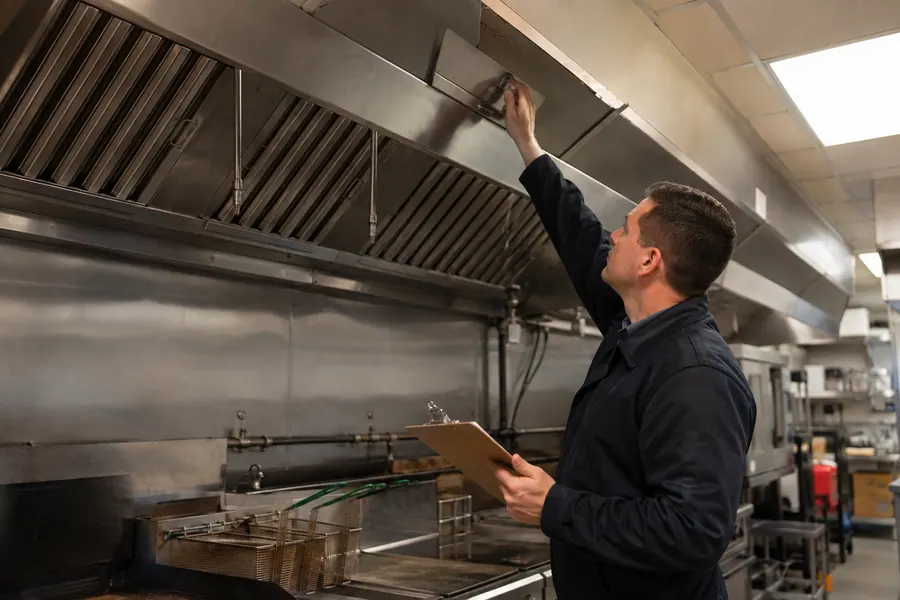
Routine staff-level checks keep the visible parts of the system under control between professional services. These checks are visual. They do not require opening the duct, disconnecting the fan, or touching any part of the suppression system.
Look at the filters for visible clogs, damage, or excessive grease accumulation.
Wipe down the exterior hood surfaces and note any grease buildup that appears heavier than normal.
Watch for grease or stains where hood panels meet, since that can signal buildup elsewhere.
Confirm that nothing blocks airflow into the hood from the cooking equipment below.
Record the date and result of each check in the same log you use for service records.
Train at least one person per shift to complete this review and to report anything unusual. If a filter looks clogged or the hood surface is heavily coated, move up the cleaning date instead of waiting for the next scheduled inspection.
Technician-only work on the exhaust system
The parts of the exhaust that staff cannot safely reach require a professional. Technician-level work includes cleaning the interior of the duct, inspecting the fan, and checking the connections between the hood, duct, and fan. These tasks require training, access equipment, and tools that a normal kitchen does not keep on site.
Interior duct cleaning to remove grease that no surface wipe can reach.
Exhaust fan inspection and cleaning, including blade and housing condition.
Inspection of the fire suppression system components: nozzles, detectors, control panel, and agent storage container.
Hydrostatic testing of the suppression agent container, which is required on a longer cycle, typically every 12 years.
Professional cleaning that follows NFPA 96 guidance for the hood, duct, and fan.
If a staff member notices a problem with the suppression system, the correct move is to call a licensed professional. Nozzles, detectors, wiring, and the agent container are not do-it-yourself items.
Cleaning and inspection frequency under NFPA 96
The most common question managers ask is how often the exhaust system must be cleaned. There is no single answer, because NFPA 96 ties the schedule to how much the kitchen produces. The standard requires commercial kitchen hoods to be inspected and cleaned anywhere from monthly to annually, depending on cooking volume. A kitchen that produces heavy grease should sit at the shorter end of that range, while a light-use kitchen may not need the same frequency.
The fire suppression side has its own separate schedule. NFPA 96 requires a kitchen hood fire suppression system inspection every six months, and the work must be completed by a licensed fire protection professional. Beyond those six-month visits, a complete program includes monthly visual checks and hydrostatic testing of the agent container every 12 years. Keep both schedules on one calendar so neither one slips.
Broader ventilation maintenance also touches hood filters, exhaust fans, makeup air, and HVAC filters. These systems are linked to kitchen air quality and temperature, so when you build a restaurant maintenance routine, review them as a group.
Service records prove the checklist was followed
Fire inspectors usually ask the same question in different wording: where are the records? Technicians preparing to work on your system follow the same logic. A technician will first review past service records to identify recurring issues, then move to the physical inspection of the hood and duct. That sequence shows why paper is as important as the cleaning itself.
Keep records that cover the hood, ductwork, nozzles, detectors, control panel, and agent container. A simple format lists the date, the company or person who performed the work, what was cleaned or inspected, and any issues found. When the next professional visit happens, that file gives the technician a starting point and gives the inspector confidence that the kitchen has a maintenance routine instead of a one-time cleaning.
Prepare with official guidance and a printable checklist
Fire marshal publications exist to answer the question of what an inspector checks. Those documents clarify the minimum building code requirements for a commercial hood inspection, and they often note that proper installation cannot be confirmed without complete plans and specifications. Read the version used in your area, and keep copies of permits, inspection reports, and cleaning records ready for review.
A full pre-inspection service matters most when grease has built up inside the duct or around the fan. That is when restaurant managers usually book kitchen exhaust system cleaning for restaurants rather than attempting a deeper clean with in-house tools. A professional cleaning visit becomes the newest entry in the file you show at the inspection, and it gives the technician a baseline for the next check.
Clean filters and hood surfaces also help the exhaust fan work efficiently, and they are easier for your staff to maintain between professional visits. The earlier you address grease in the visible areas, the less buildup the technician has to remove from the duct later.
Frequently Asked Questions
How often do kitchen hoods need to be cleaned under NFPA 96?
NFPA 96 requires commercial kitchen hoods to be inspected and cleaned on a schedule that ranges from monthly to annually, depending on your cooking volume. Kitchens that generate more grease need shorter intervals between cleanings. Your cleaning provider can help set the right interval for your menu and equipment. Keep the schedule in writing so the fire inspector can see that the interval matches how the kitchen operates.
Who should inspect the fire suppression system above the hood?
The fire suppression system above the cooking line, including the nozzles, detectors, control panel, and agent storage container, must be inspected by a licensed fire protection professional. This inspection is required every six months. Kitchen staff can perform regular visual checks of the hood area and filters, but they should never service, test, or modify the suppression system themselves. Call a licensed company if you see damage, leaks, or a missing inspection tag.
What service records should a restaurant keep for the exhaust system?
Keep records that cover the hood, ductwork, nozzles, detectors, control panel, and agent container. Each entry should list the date, the company or person who performed the work, and the type of service completed. Technicians often start a new inspection by reviewing past service records to identify recurring issues. A complete file tells the inspector that maintenance has been consistent rather than occasional.
Plan your next move before the notice arrives. Download the checklist and book inspection while your schedule still has flexibility, so the hood, duct, fan, and filters are clean and your service records are current. A prepared kitchen walks into any fire inspection with less stress and a clear paper trail.
For kitchen exhaust service across Vancouver and Metro Vancouver, learn more about Larsa Vent Cleaning before booking the cleaning work that keeps inspection records current.