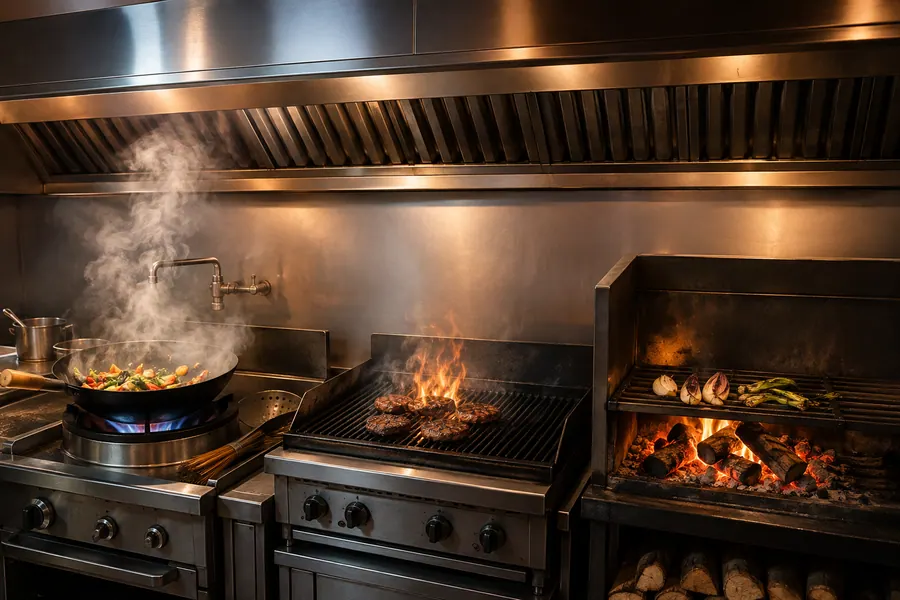
A kitchen running wok burners, charbroilers, or solid-fuel equipment cannot follow the same hood cleaning plan as a bakery or a prep kitchen. Under the NFPA 96 schedule used by fire officials and insurers, high-volume operations with wok cooking and charbroiling get a hood cleaning every three months and a monthly inspection. Solid-fuel cooking, such as wood-fired ovens and charcoal grills, moves up to monthly cleaning regardless of how many hours the equipment runs. Wok kitchen hood cleaning frequency therefore depends less on the size of the restaurant and more on the way the equipment is used.
Restaurants in Metro Vancouver and the rest of BC also answer to the authority having jurisdiction (AHJ) for their area. The AHJ can adopt NFPA 96 or add local requirements that shorten the interval. This article explains how cooking method and volume change inspection needs, shows a decision matrix for high-grease kitchens, and clarifies when the schedule should be confirmed with a qualified professional.
Quick Reference: Cleaning and Inspection Frequency for High-Grease Kitchens
The table below summarizes the frequency categories that appear most often for wok, charbroiler, and solid-fuel exhaust systems.
These intervals come from the NFPA 96 frequency structure used across commercial kitchen cleaning guidance. A restaurant can be placed in a shorter cycle by the AHJ based on local fire code, building type, or inspection history. When the kitchen combines several high-grease appliances, the stricter category usually applies.
Why Cooking Method and Volume Change the Schedule
Kitchen exhaust cleaning frequency is determined by how the restaurant operates. Solid-fuel cooking, open flames, heavy frying, and long operating hours all put more grease into the ductwork in less time. Hood filters catch the largest particles, while the rest moves into the hood plenum, the duct, and the exhaust fan. A kitchen with woks or charbroilers produces that heavy grease load during every service. A light-prep kitchen with a small griddle does not.
Wok Cooking
Wok burners run hot and often use cooking oil at high heat. A high-volume wok station also runs continuously through lunch and dinner, with little time for the exhaust system to cool down. This places the kitchen in the quarterly cleaning category and the monthly inspection group. Restaurants with multiple wok stations should not treat the system as moderate volume just because the dining area is small.
Charbroilers
Charbroiling exposes dripping fat to open flame, creating residue that hardens along the exhaust path. A kitchen with a large charbroiler line is handled as high-volume because of the volume of grease released per hour. Industry guidance adds an important detail: if the charbroiler runs more than 6 hours per day, schedule a professional inspection after the first month of operation. That first inspection shows how quickly grease is building up on that specific system before a full cycle is completed.
Solid-Fuel Equipment
Wood-fired ovens, charcoal grills, and other solid-fuel cooking generate smoke and ash that combine with grease in the exhaust system. NFPA 96 frequency tables set monthly cleaning for solid-fuel cooking at any duration. Even a wood-fired oven used only for weekend service does not drop below that category, because the fuel type changes the risk profile in a way that hours alone cannot predict.
Volume shapes the schedule in the same way. A 24-hour kitchen that cooks with woks or charbroilers across every shift puts far more grease into the duct than the same equipment used for a short lunch service. That is why frequency guidance groups high-volume operations together and assigns them quarterly cleaning plus monthly inspection.
Decision Matrix: Finding the Correct Frequency Category
A decision matrix helps classify the kitchen before service is booked. Answer two questions: which cooking appliances are in use, and how many hours per day does that equipment run? Then match the answer to the matrix below.
The main insight from this matrix is that both factors point toward short cycles when wok cooking, charbroiling, or solid fuel appears on the menu. When in doubt, classify the kitchen as high-volume and confirm the final schedule with a commercial kitchen exhaust specialist who works with the local AHJ.
Monthly Inspection: What It Covers and What It Does Not
Monthly inspection is not a mild form of cleaning. It is a documented review of the exhaust system to confirm that grease has not reached a level that creates a fire hazard or blocks airflow. High-volume operations such as 24-hour cooking, charbroiling, or wok cooking should have that monthly inspection, and solid-fuel kitchens are usually held to the same cadence. Low-volume operations follow different rules and may not need a monthly visit.
The inspection looks at what is visible and measurable: grease thickness on the filter bank, exposed duct surfaces, and accessible sections of the exhaust fan. Filter cleaning is often included at the same visit because clean filters help the hood capture grease instead of letting it pass into the ductwork. A monthly inspection does not replace the deeper cleaning of the full duct run, but it reveals whether the quarterly cleaning interval is working.
If a monthly inspection shows that grease is building faster than expected, the right response is to shorten the cleaning cycle, not to wait for the scheduled quarterly service. If the system stays clean for several cycles, the category assigned to the cooking type still should not be ignored. The AHJ and the insurance file both rely on a schedule that matches the equipment and its operating hours.
Warning Signs That the Schedule Is Too Long
A few warning signs indicate that the exhaust system needs attention sooner than the next planned visit.
Grease dripping from filters, hood seams, or duct access panels.
Grease that remains sticky or heavy on surfaces that should feel dry after a cleaning.
Cooking odours or smoke lingering in the dining room instead of leaving through the exhaust.
A noticeable drop in draft, so the hood no longer captures steam and smoke at the cooking surface.
Any of these signs means the system should be inspected before the next scheduled cleaning date. In a high-volume kitchen, waiting until the end of the quarter gives the grease more time to reach duct sections that are harder to access and more expensive to clean.
Cleaning, Inspection, Maintenance, and Mechanical Work: Know the Boundary
Kitchen exhaust care involves several distinct tasks. Filter and hood cleaning is the regular surface service that keeps the system working day to day. Full exhaust system cleaning extends to the hood plenum, the duct, and the fan. Inspection records the condition of the system and the level of grease found. Mechanical repairs such as fan motor replacement or duct sealing belong to different trades and usually require different certifications.
For a restaurant owner, the practical takeaway is simple. Do not assume a cleaning visit includes an inspection report, and do not assume an inspection includes deep duct cleaning. Ask the provider what will be examined, what will be cleaned, and what documentation will be left for the fire safety file. The AHJ and the insurance provider may ask to see service records, so the report should state the date, the frequency category, and the exact work performed.
Confirm the Schedule with the AHJ and a Qualified Professional
Published guidance sets the baseline, but the final schedule is confirmed locally. In BC, fire inspection departments and building officials act as the authority having jurisdiction, and they can require a shorter interval than the typical NFPA 96 table. A qualified commercial kitchen hood cleaning specialist should review the equipment list, the operating hours, and past inspection reports before recommending a schedule.
Restaurant owners in the Lower Mainland often start by asking about commercial kitchen hood cleaning because a service visit can combine the inspection, the filter service, and the documentation needed for fire code compliance. When the menu includes wok stations, charbroilers, or solid-fuel appliances, the schedule should be reviewed before an inspection date arrives, not after one uncovers a problem.
Frequently Asked Questions
How often should a wok kitchen hood be cleaned?
A high-volume wok kitchen should have the hood cleaned every three months and a monthly inspection under the NFPA 96 frequency structure. Kitchens where woks run for many hours across multiple meal periods fit the high-volume category. A kitchen with lighter wok use may still need quarterly cleaning if the menu includes heavy frying or the wok line operates during most service hours. Confirm the final schedule with the AHJ for the area.
Why does solid-fuel cooking require monthly hood cleaning?
Solid-fuel cooking, such as wood-fired ovens and charcoal grills, is placed in the monthly cleaning category at any cooking duration. The fuel type creates smoke and ash that combine with grease in the exhaust system, and the buildup rate is harder to predict than with gas equipment. Monthly cleaning keeps the accessible components protected and gives the inspection record a consistent rhythm. The AHJ may require those records to verify compliance.
Do charbroilers need a different inspection schedule from other cooking equipment?
Charbroiling is usually treated as high-volume cooking. The open flame and dripping fat put a heavy grease load into the exhaust, which pushes the cleaning interval to every three months. If the charbroiler runs more than 6 hours per day, industry guidance recommends a professional inspection after the first month of operation so the buildup rate can be confirmed for that system. Monthly inspection is common for this equipment class.
Who decides the hood cleaning frequency for a BC restaurant?
The authority having jurisdiction, usually the local fire inspection department, has the final word on the schedule for each restaurant. Many areas follow NFPA 96 frequency categories, but the AHJ can apply stricter intervals based on the building and the equipment. A qualified hood cleaning professional can document the system condition and recommend a schedule that supports both fire safety and inspection readiness.
Review the Correct Schedule for Your Kitchen
The next step is to review the correct schedule for your wok, charbroiler, or solid-fuel kitchen before the next busy season begins. Compare the equipment list, confirm the daily cooking hours, and decide whether the operation belongs in the monthly, quarterly, or moderate-volume group. Then book a service that matches that risk and keep the inspection report on file. Review the correct schedule now so the cleaning date is planned ahead, the documentation is ready, and the exhaust system does not become a problem during the next fire inspection.
For more about the company serving Vancouver and Metro Vancouver, visit Larsa Vent Cleaning.