
For restaurant owners, the first question about hood cleaning paperwork is usually simple: what proves the work was actually done? A kitchen exhaust cleaning certificate is part of the answer, but it is rarely the whole answer. Inspectors and insurers look at the wider file, including the written cleaning report, the hood cleaning service tag on the equipment, deficiency notes, and dated photos from the visit. This article explains what each of those documents shows, what it does not show, and how to keep records that hold up when someone in authority asks to see them.
Restaurant operators in BC who understand the paperwork side of exhaust cleaning are better prepared for fire inspections, health reviews, and insurance conversations. Documentation also helps you track whether your cleaning provider is doing the full job, not just the visible parts.
Why the paperwork matters as much as the grease removal
Commercial kitchens are expected to show that exhaust cleaning happens on a regular schedule, not just when someone remembers to book it. Cleaning reports, tags, and related records are the usual way to demonstrate that routine. Fire officials and insurance providers are familiar with systems that look clean on the surface, and part of their review involves checking whether the maintenance record is consistent with the condition of the equipment.
Inspection programs in some cities flag missing service stickers and incomplete documentation as common reasons for citations. The same principle applies in most jurisdictions. Your proof of cleaning is part of the system being inspected, so it deserves as much attention as the removal of grease itself.
What a kitchen exhaust cleaning certificate and cleaning report contain
The certificate and the cleaning report work together. The certificate states that the service was performed, while the report provides the supporting details. Some providers issue both on one page; others hand over a separate certificate of performance with the report attached. A vague document that only says "cleaned hood" gives you little protection during a review.
Typical fields on a professional cleaning report
A useful report identifies the restaurant, the date of service, and the cleaning company. It should also name the technician responsible for the visit and list the components that were included. In a full exhaust cleaning, that means the hood, grease filters, ductwork, exhaust fan, and any rooftop or exterior portions of the system.
Service date and location
Company name and technician identification
List of components cleaned
Method of cleaning used
Observations about the condition of the system
Notes on any repairs or follow-up work recommended
Look closely at how specific the report is. A one-line receipt does not tell an inspector whether the duct was opened and cleaned or whether the technician only wiped the visible filter surfaces.
Deficiencies deserve their own place in the file
Good cleaning providers record deficiencies they find, such as heavy buildup in an area that could not be fully reached or a component that needs replacement. That record protects you because it shows the limitation was identified and communicated. Keep the deficiency note even after the issue is corrected, and keep a separate record of who made the repair and when.
What a hood cleaning service tag adds
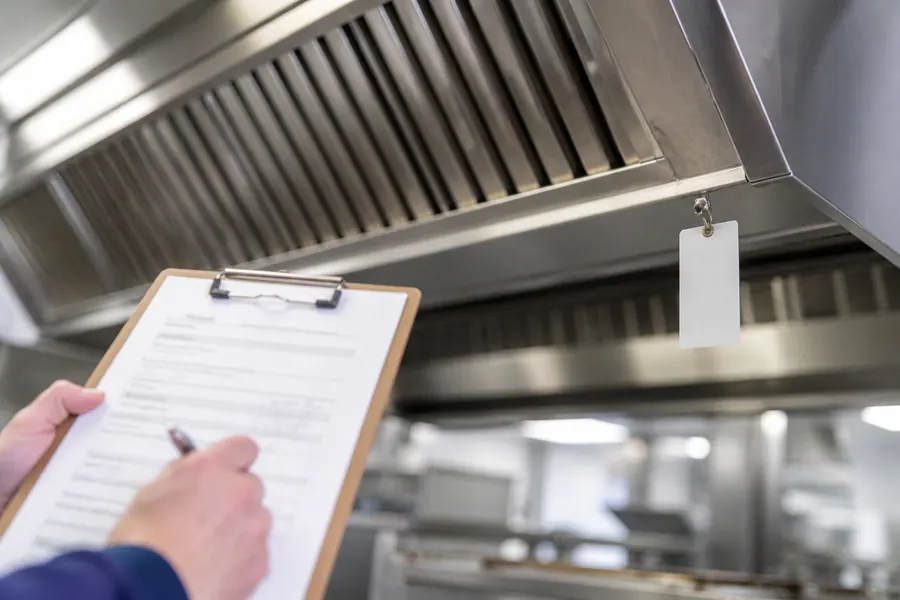
A hood cleaning service tag is a physical marker left on or near the exhaust system after cleaning. It gives inspectors a quick visual check without requiring them to open a file folder. The tag usually shows the service provider and the date of the most recent cleaning.
A tag has limits. It can remain on equipment long after the service date, and it does not describe what was cleaned or what condition the system was in. If a tag says the system is serviced monthly but the filters are visibly loaded with grease, the mismatch will raise more questions than a missing tag would. Photograph the tag after each service and attach that photo to your digital records.
What certificates and reports cannot prove
No single document proves that an exhaust system is grease-free at the moment an inspector looks at it. A certificate is a snapshot of a service visit, not an ongoing guarantee. Here are the main limitations to keep in mind:
A certificate does not prove the quality of the work. It only proves a service was performed and reported.
A report reflects what the technician accessed. If the ductwork was not opened, the report cannot claim it was cleaned inside.
A tag or sticker does not show the condition of the system between visits.
Paperwork from a cleaning visit does not certify that mechanical or electrical repairs were completed correctly.
Records are also only as credible as the provider behind them. A certificate from a company that has no inspection process, no technician training, and no photo evidence is worth very little when a claim or citation is on the line.
Keep a complete inspection record over time
A healthy documentation habit goes beyond the latest certificate. Build a file for each exhaust system that includes reports, photos, tags, invoices, deficiency notes, and inspection documentation from previous years. Older records matter because they show a pattern of scheduled cleaning rather than a single reaction to an upcoming inspection.
Keep a digital copy of every cleaning report and certificate.
Save labeled before and after photos from each visit.
Photograph the service tag before the technician leaves.
Keep invoices as proof that the work was paid for and completed.
Retain deficiency records and any documentation of corrective action.
Digital copies are easier to maintain across staff changes and easier to forward to an inspector, insurer, or property manager. Ask your provider whether they send electronic copies after each visit. If they do not, create your own scan before the paperwork goes into a drawer.
Use before and after photos as supporting evidence
Photographs give inspectors context that a certificate cannot provide. A set of clear before and after images from the same angle shows grease being removed from the filters, the hood, and any visible duct surfaces. Photos also help you confirm that the provider actually worked on the areas listed in the report.
Before you book a new provider, ask to see a redacted sample of the cleaning report and tag they use. A company that can show you its documentation before the job will usually be just as organized on site. A company that cannot explain what you will receive is likely to leave you with something thin.
What inspectors and insurers may ask for
During a review, an inspector may ask to see cleaning reports with dates that match the required service interval for your type of cooking operation. They may also look for a service tag on the equipment and compare its date with your records. If the tag and the report do not line up, expect questions.
Insurers can take an interest in exhaust cleaning records after a fire. In some cases, improper cleaning or missing proof of regular cleaning has been cited when insurance claims are questioned. A well-documented history of full-system cleaning gives your insurance provider a clear picture and removes doubt about whether maintenance was neglected.
Certification requirements for cleaning technicians vary by location. Some US states require technicians to hold a certificate of competency from the State Fire Marshal. In BC, requirements can differ by municipality, so confirm with your local fire authority what qualifications and standards they expect your provider to follow.
Choose a provider who documents like a professional
Before hiring a cleaner, ask how they handle the parts of the system that are not visible from the cooking line. A true cleaning visit treats the hood, ductwork, and exhaust fan as connected parts of one system. Cleaning that stops at the filters may leave heavy grease in the duct, where it poses the greatest risk.
There is also a clear boundary between cleaning and mechanical work. A cleaning technician can note that a fan motor or damper needs attention, but that note does not replace the repair itself. Keep the deficiency record, arrange the repair with the appropriate trade, and document the fix separately.
For restaurant owners in Vancouver and the Lower Mainland who want to understand the full scope of this work, the details of a proper commercial kitchen hood cleaning are outlined on the Larsa Vent Cleaning service page. Compare that scope with what your current provider includes before you sign off on another visit.
The strongest documentation routine is simple. Read the report before you accept it, confirm the tag has been placed, and store every record in one place. That habit protects you during an inspection and gives you confidence that the system was properly maintained.
Frequently Asked Questions
Does a kitchen exhaust cleaning certificate guarantee the work was done properly?
No certificate can guarantee quality on its own. It confirms that a service visit took place and records what the technician reported, but the value depends on the detail in the report and the standard of the provider. Compare the certificate with photos and deficiency notes after every visit. If the written record is vague or nothing was documented on site, that is a reason to question the service.
How long should I keep hood cleaning reports and tags?
Keep every cleaning report, photo set, service tag photo, invoice, and deficiency note from each service visit. Older records matter too, because inspectors and insurers may want to see a consistent pattern of scheduled cleaning, not just one recent certificate. Digital copies are easier to organize and less likely to disappear when staff changes. Confirm what your local fire authority and insurance provider expect.
What is the difference between a cleaning report and an inspection record?
A cleaning report records what was cleaned, when, and by whom. An inspection record focuses on the condition found, including grease buildup, damaged parts, or hazards that need correction. Many providers combine both into one document, while others deliver a separate deficiency list. Ask which format you will receive and keep both types, because each answers a different question during a review.
Should I ask for paperwork before the technician leaves?
Yes. Review the report on site while the details are still fresh. Confirm that it lists the cleaning date, the scope of work, and the technician or company responsible. Photograph the hood cleaning service tag for your files and ask what documentation is included before the crew leaves. A complete, dated file makes your next inspection easier and gives an insurance claim stronger support.
For Vancouver service, contact Larsa Vent Cleaning about its commercial kitchen hood cleaning and confirm which service records are included.