
If you run a restaurant in Vancouver, the most useful thing to know about ventilation is simple: keeping the exhaust system clean is an ongoing operational duty, while installing or changing the hood, duct, or fan is a permitted project. Mixing those two up causes real problems. Owners sometimes assume that signing a cleaning contract covers code compliance, or that an approved installation removes the need for scheduled grease removal. Neither is true. Grease vapours from fryers, ranges, and griddles collect inside the hood and duct every day the kitchen runs. This guide explains commercial kitchen ventilation requirements in Vancouver from a cleaning-focused angle, and it shows where your routine responsibilities end and where a permit, engineer, or specialist contractor has to step in.
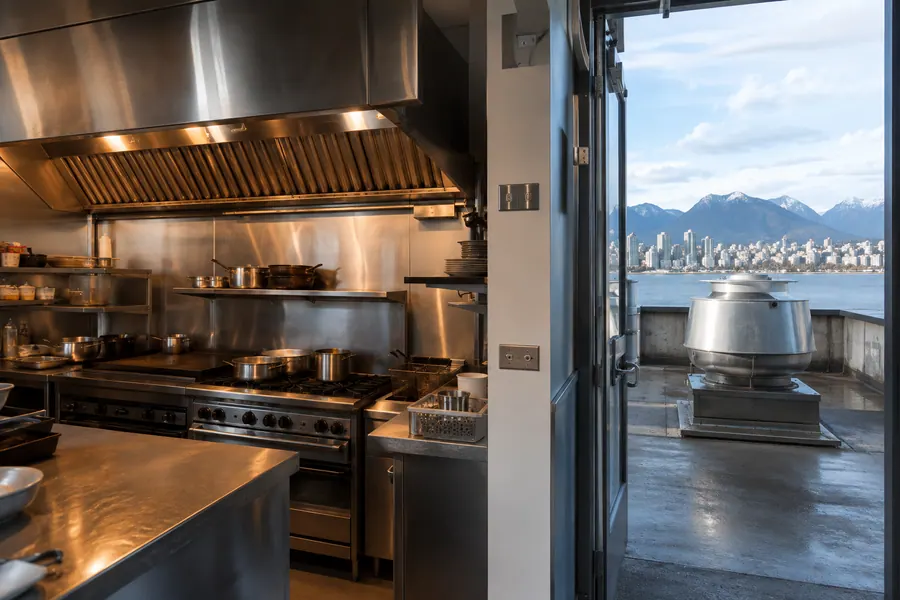
The City of Vancouver publishes a page titled Building permit for restaurant kitchen ventilation. Its guidance is short and worth reading before any equipment work: restaurants and kitchens need ventilation and fire protection to safely remove greasy vapours, and you must get the right equipment plus a building permit to install it. In other words, the City regulates the design and installation side. The cleanliness of that equipment, once it is running, is maintained through your own program of professional cleaning and inspection.
Use this table to see which side of the requirements applies to a given situation.
Find your situation in the left column. If it falls in the top three rows, you are in project mode and should start with the City and a qualified designer. If it falls in the bottom rows, you are in maintenance mode, and your attention should turn to scheduling, inspection readiness, and records.
What the City of Vancouver and Its Permit Process Cover
The City of Vancouver regulates the upfront work. Its published guidance for restaurant ventilation says that restaurants and kitchens need ventilation and fire protection to safely remove greasy vapours, and that you must get the right equipment plus a building permit to install it. That places the hood, duct, exhaust fan, and related approvals on the permit side of your ledger. The City also provides straightforward contact routes. You can reach it through Van311, by calling 3-1-1 from a Vancouver phone, or by calling 604-873-7000 from outside Vancouver. Use those channels for project-specific questions about drawings, approvals, and inspections.
The Practical Shape of Commercial Kitchen Ventilation Requirements in Vancouver
The requirements make more sense when you understand the components and what each one does. The terms below come up in every contract, inspection, and cleaning quote, so a few minutes spent learning them pays off.
Type I Hoods and When They Are Required
A Type I hood is the official name for a grease hood. It is designed to remove heat, smoke, condensation, and other grease byproducts of cooking. Type I hoods are required for equipment that produces smoke or grease-laden fumes. In a standard restaurant kitchen, that equipment includes fryers, ranges, and griddles. The hood captures contaminated air at the source and directs it into the exhaust system.
Grease Vapours and the Buildup Problem
Grease vapours are the airborne fats and oils released by high-heat cooking. They rise from the cooking surface, enter the Type I hood, and travel through the exhaust system. As the vapours cool, grease condenses on duct walls, fan blades, and other interior surfaces. Filters remove part of the load, but never all of it, which is why every professional cleaning includes surfaces beyond the visible hood.
The Exhaust System Route to the Outdoors
The exhaust system consists of the duct work, exhaust fan, and discharge point that carry air from the hood to the outdoors. A Type I hood exhaust system does not release grease-laden air inside the building. The Uniform Mechanical Code, used in many North American jurisdictions, requires Type I hood exhaust systems to terminate directly outside the building through an exhaust fan or duct. When grease blocks that route, the entire kitchen loses performance.
Fire Protection Works Alongside Ventilation
Fire protection is a separate system that works with the ventilation. NFPA 96, the standard that governs commercial cooking exhausts, requires automatic fire suppression systems for most commercial cooking operations. The role of cleaning is to reduce the grease available to burn, while the suppression system is there to respond if a fire starts. Both layers matter, but they are not interchangeable.
Where Cleaning Fits Within the NFPA 96 Framework
NFPA 96 covers the design, installation, operation, inspection, and maintenance of every major exhaust component, including the hood, duct, fan, and fire suppression equipment. For day-to-day purposes, treat it as the baseline for a defensible cleaning program.
From a cleaning perspective, that translates into a clear set of expectations:
Grease must be removed from the hood interior and from the filters that capture the heaviest vapour load.
The duct work between the hood and the exhaust fan needs to be part of the cleaning scope.
The exhaust fan and the discharge area require attention, since grease collects there as vapours cool.
Cleaning history should be documented so you can answer questions from inspectors.
Restaurant owners who are planning new work should also understand one construction detail: NFPA 96 requires seams, joints, and penetrations that carry grease-laden vapours to be welded liquid-tight. Welded duct leaves fewer ledges and crevices where grease can build, which makes future cleaning simpler and more effective.
When you schedule maintenance, the scope should cover the full pathway rather than the outside of the hood only. Professional kitchen exhaust system cleaning for restaurants includes the filters, hood surfaces, duct work, and fan, which is the level of detail required to control grease properly and stay inspection-ready.
How often should cleaning happen? No fixed interval fits every kitchen. The factors that matter include daily cooking hours, frying volume, recipe or menu changes, and what the last inspection revealed. An experienced cleaner looks at the actual deposit layer and sets a realistic schedule from the condition of the system.
Signs That the Exhaust System Needs Cleaning Sooner
You can spot problems without opening the duct work. A few simple observations are enough to pull a cleaning forward.
Grease buildup visible on filters or dripping from the underside of the hood.
The kitchen feels smoky or hot even with the exhaust fan running.
The fan is noisier or shakier than it used to be.
Less air is pulled at the hood face than in past months.
These signs are not a substitute for a proper visual inspection, but they are useful triggers. If you notice any of them, schedule a professional assessment and ask the technician to check the duct and the fan rather than stopping at the visible parts of the hood.
Cleaning, Inspection, and Specialized Work Are Different Roles
A cleaning company removes accumulated grease and reports what it finds. Cleaning alone does not fix mechanical faults, and it certainly does not create an approved system. A fan that is undersized, a duct with leaks, or a roof penetration in poor condition all need the appropriate trade. Likewise, fire suppression testing, maintenance, and recharging belong to technicians who specialize in extinguishing systems.
Ask every vendor to state its scope in writing. If a cleaning technician points out an issue outside the cleaning role, request a written summary you can forward to the right specialist. That small habit keeps accountability clear and saves arguments later.
Official Sources for Vancouver Restaurant Ventilation Rules
Official sources matter because ventilation rules tie into building permits, local fire codes, and adopted editions of national standards. The City of Vancouver's Building permit for restaurant kitchen ventilation page is the primary source for the permitting stage. Its core message is direct: you need the right ventilation and fire protection equipment, and you need a building permit to install it. The City's contact channels, Van311, 3-1-1 within Vancouver, and 604-873-7000 from outside Vancouver, are the correct starting points for project-specific answers.
For equipment and maintenance standards, NFPA 96 is the reference most often cited for commercial kitchen hoods and exhaust systems. The current published edition is NFPA 96 (2024). A local authority may still enforce an older adopted edition such as 2017 or 2021, so confirm which one applies to your kitchen before making assumptions. Model codes such as the International Mechanical Code and the Uniform Mechanical Code also contain exhaust system rules, and local codes in your area may reference them. Only the authority having jurisdiction can tell you what is actually enforced.
Frequently Asked Questions
Do I need a building permit to install a restaurant kitchen ventilation system in Vancouver?
Yes. The City of Vancouver states that restaurants and kitchens need ventilation and fire protection to safely remove greasy vapours, and that the right equipment requires a building permit to install it. If your project involves a new hood, duct, or exhaust fan, check with the City before work starts. Contact Van311 or call 3-1-1 within Vancouver, or 604-873-7000 from outside.
What is a Type I hood and do I need one?
A Type I hood, sometimes called a grease hood, is designed to remove heat, smoke, condensation, and other grease byproducts of cooking. Type I hoods are required for cooking equipment that produces smoke or grease-laden fumes. In a typical restaurant, that includes fryers, ranges, and griddles. If your menu uses those appliances, your ventilation design should begin with a Type I hood.
How often should a commercial kitchen exhaust system be cleaned?
There is no universal schedule that fits every kitchen. Cleaning intervals depend on how much grease the cooking line produces, how many hours the equipment runs, and what recent inspections or cleanings revealed. A kitchen that fries continuously needs more frequent service than a lighter operation. Ask a professional to measure the actual accumulation and recommend an interval.
Can hood cleaning replace fire suppression service?
No. Grease removal and fire suppression serve two different purposes. Removing grease lowers the fuel available for a fire, while automatic suppression systems are required for most commercial cooking operations. Those systems are inspected, tested, and recharged by specialized technicians. You need both, managed separately, to keep the kitchen safe and ready for inspection.
Every restaurant owner benefits from knowing the real condition of the hood, duct, and fan. If you are preparing for an inspection, dealing with weak airflow, or unsure how to set a cleaning schedule, the logical next step is to request a cleaning/accessibility assessment. A professional can look at the full system, describe the actual grease condition, and recommend what should happen next. From there, you can decide whether the work is a routine cleaning or something that needs another specialist. For service in Metro Vancouver, explore Larsa Vent Cleaning and its commercial kitchen exhaust cleaning options.