
Most commercial kitchens should clean their baffle filters somewhere between every week and every 12 weeks, and the deciding factor is how much frying and grease-heavy cooking happens on the line. High-volume fry kitchens often need weekly washing, moderate use usually lands at every 2 to 4 weeks, and lighter cooking can stretch to monthly or as needed. Kitchen staff typically own that filter care, while the hood plenum, ductwork, and exhaust fan belong to scheduled professional hood cleaning. This article lays out a practical schedule, the warning signs that filters are overdue, what to replace and when, how to handle greasy filters safely, and where staff cleaning stops and trained exhaust work begins.
Baffle filter cleaning frequency at a glance
Use this table as a starting point, then adjust based on what you actually see on the filters at the end of a busy shift.
| Kitchen situation | Filter cleaning interval | Who handles it |
| Heavy frying, high daily volume | Weekly | Kitchen staff |
| Frying most days, moderate volume | Every 2 to 4 weeks | Kitchen staff |
| Light cooking, low grease load | Monthly or as needed | Kitchen staff |
| Full hood, duct, and fan system | Often monthly to annually | Professional hood cleaning provider |
Published filter cleaning ranges run from 2 to 12 weeks depending on frying volume, and full system cleaning intervals are usually set between every 1 and 12 months. NFPA 96 calls for commercial kitchen hoods to be inspected and cleaned anywhere from monthly to annually, based on cooking volume and the type of cooking equipment in use.
What baffle filters do and why the interval moves
Baffle filters are the slotted metal panels sitting in the hood opening above your cooking equipment. They are built to trap grease before it travels deeper into the exhaust system, which is why they take the heaviest grease load of any component in the system and why they need attention far more often than the ductwork behind them.
Four things push a filter schedule up or down:
- Cooking volume. More covers per day means more grease per day.
- Cooking method. Deep frying and flat-top work load filters faster than steaming or light sauteing.
- Filter count versus output. A small filter bank under heavy production saturates quickly.
- Filter care habits. Filters washed before they clog last longer and stay easier to clean.
The full system also has a chain of components: the filters, the hood, the plenum above the filters, the ductwork, and the exhaust fan on the roof or wall. All of it collects grease, and only the filters are practical for staff to handle.
Daily and weekly staff cleaning
Staff cleaning is the front line of grease control. Your team owns the filters and the surfaces they can safely reach, and a consistent routine keeps the whole system in better shape between professional visits.
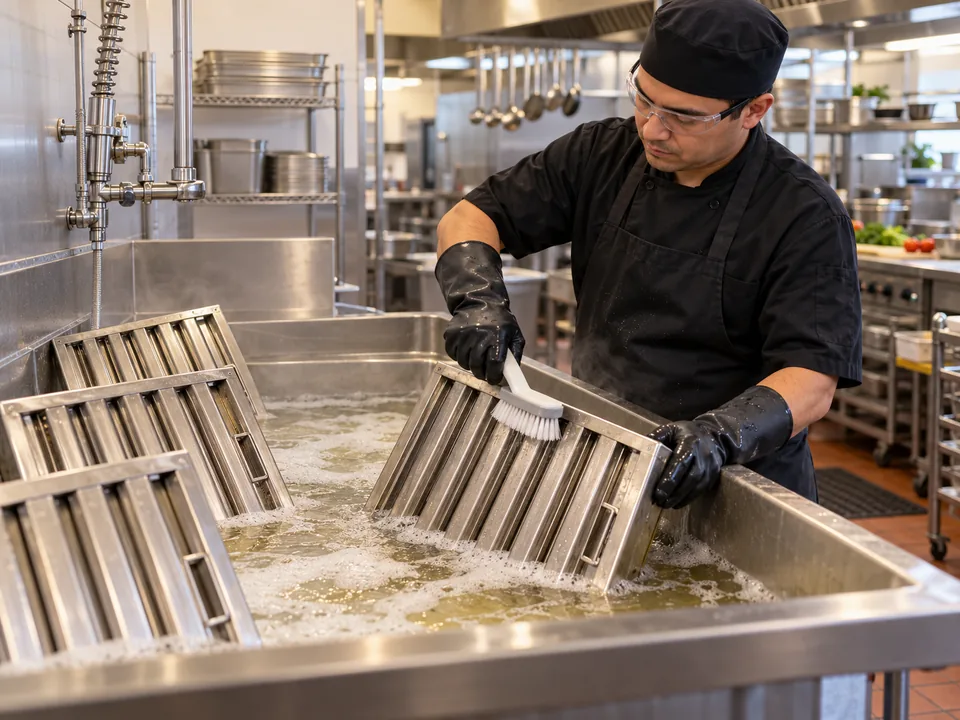
The standard method is straightforward. Remove the filters carefully, then soak them in hot water mixed with a commercial degreaser. Give them a minimum of 15 to 20 minutes of contact time as a baseline, and expect heavier grease to need a longer soak, with some kitchens running two to three hours. After soaking, scrub, rinse, and let the filters dry before they go back in place.
A few habits make this realistic on a working line:
- Break the job into pieces. Cleaning one filter per day keeps a small team from facing a massive single task.
- Wipe down the cook line, walls, and hood surfaces while you are already in the area.
- Check filters at the end of high-volume shifts rather than assuming the calendar is enough.
- Record the date of each wash so nobody is guessing later.
Scheduled professional exhaust cleaning
Staff washing does not replace professional service. Grease that gets past the filters settles on the plenum, coats the ductwork, and collects on the exhaust fan, and none of that is safely reachable with a sink and a scrub brush.
A professional visit covers the full inspection and cleaning of the hood, ductwork, and exhaust fan, and it is normally performed on a cycle somewhere between every 1 and 12 months. Cooking volume and cooking type set the interval. High-volume fry operations sit at the frequent end, and lighter operations sit closer to annual service.
In Canada, requirements can vary by province and municipality, and your insurer may set its own expectations. Confirm your specific obligations with the local authority having jurisdiction and your insurance provider rather than assuming a single national number applies.
Signs your hood filters are overdue
Calendars slip. Look at the filters themselves and act on what you see:
- Visible grease film or drips on the baffles after a wash cycle.
- Filters that still feel slick or heavy once they are dry.
- Grease collecting in the hood trough or running down hood surfaces.
- Slower capture of smoke and cooking vapours over the line.
- A visible grease layer on the plenum area behind the filters.
Any of those signs means the interval is too long for your current production, regardless of what the schedule says.
When baffle filters need to be replaced
Cleaning only works while the filter itself is intact. Baffle filters should be inspected for physical condition each time they come out, and replaced when cleaning no longer restores them.
- Bent, crushed, or distorted baffles that no longer sit square in the frame.
- Damaged or warped edges that leave gaps where grease can bypass the filter.
- Filters that no longer fit snugly and shift when the exhaust pulls air.
- Structural damage that no amount of soaking and scrubbing will correct.
Filter specifications vary by hood model and manufacturer, so confirm sizing and compatible replacement parts with your hood supplier or a qualified technician before ordering. A filter that is the wrong size creates the same bypass problem as a damaged one.
Handling safety around grease filters
Greasy metal panels are heavier and more awkward than they look, and a busy kitchen is a poor place for a dropped filter.
- Wear gloves when removing, soaking, and scrubbing filters.
- Support the panel with both hands and lift it clear of the hood rather than dragging it out.
- Watch the sharp edges and corners on older or damaged baffles.
- Do not carry dripping filters across a working line or across walkways.
- Keep soak water and rinse areas clear of the traffic path, and clean up spills immediately.
- Let filters dry fully before reinstalling them.
Filter condition photo guide
A dated photo record can help managers compare filter condition between cleaning cycles. Photograph filters from the same angle, note the date and kitchen workload, and use the images alongside written inspection notes rather than treating a photo alone as a cleaning standard.
Planned shots for the guide:
- A freshly cleaned baffle filter, front and edge view.
- A filter at normal mid-cycle grease load.
- A filter that is overdue, showing grease film on the baffle edges.
- The plenum area behind the filters at normal and overdue stages.
- A damaged or bent filter that needs replacement, shown next to a good one.
- The hood trough and surrounding surfaces at each stage.
Where staff cleaning ends and professional work begins
Keep the boundary clear. Staff cleaning covers removable filters and accessible surfaces. Professional work covers the hood plenum, ductwork, exhaust fan, and any grease removal that requires access to enclosed system components.
Inspection sits with the professional crew as well. Judging how much grease has accumulated inside a duct or on a fan blade is not a visual check from the kitchen floor, and it is not the same task as swapping a filter. Mechanical repairs, roof access, and work tied to fire code documentation belong with the qualified service provider and the local authority having jurisdiction.
For the full system side of the work, see our commercial kitchen hood cleaning service page, which covers the hood, duct, and fan scope in more detail.
Building filter care into a maintenance plan
The practical next step is simple. Set a filter interval that matches your cooking volume, write it into the kitchen cleaning routine so it does not depend on memory, and pair it with a professional exhaust cleaning schedule for everything the filters cannot protect. Many kitchens run the two on the same calendar so filters, hood, duct, and fan stay in step, and so records are easy to produce when an inspector or insurer asks. Add filters to the maintenance plan, and let the schedule do the work instead of a last-minute scramble.
Frequently Asked Questions
How long should baffle filters soak before scrubbing?
Plan on a minimum of 15 to 20 minutes of contact time in hot water with a commercial degreaser, then scrub, rinse, and dry. Heavily loaded filters usually need longer, and some kitchens run a two to three hour soak. If grease still feels slick after a normal soak, extend the time or increase the degreaser concentration according to the product instructions.
Can kitchen staff clean everything in the exhaust system?
No. Staff cleaning covers the removable baffle filters and accessible surfaces around the cook line. The hood plenum, ductwork, and exhaust fan collect grease that staff cannot safely reach, and those components are handled by a professional provider on a scheduled interval, often somewhere between monthly and annually depending on cooking volume and cooking type.
How often does a professional need to clean the full system?
Full inspection and cleaning of the hood, ductwork, and exhaust fan is usually performed on a cycle between every 1 and 12 months. NFPA 96 guidance ties the interval to cooking volume and the type of cooking equipment, so a heavy fry kitchen sits near the frequent end while lighter operations sit closer to annual service. Confirm local requirements with your authority having jurisdiction.
What happens if baffle filters are cleaned too rarely?
Grease builds on the baffles and starts bypassing into the plenum, ductwork, and fan, which increases fire risk and makes every later cleaning harder. Filters also degrade faster when grease is left to harden. Visible grease film, slick filters after washing, and grease in the hood trough all mean the current interval is too long for your production.
Should filters be cleaned one at a time or all at once?
Both approaches work, but splitting the job helps small teams. Cleaning one filter per day prevents excessive grease buildup without handing staff one large task, while a weekly full wash suits high-volume kitchens with enough staff to rotate the filter bank. Whatever you choose, log the dates and add filters to the maintenance plan so the routine survives a busy season.